
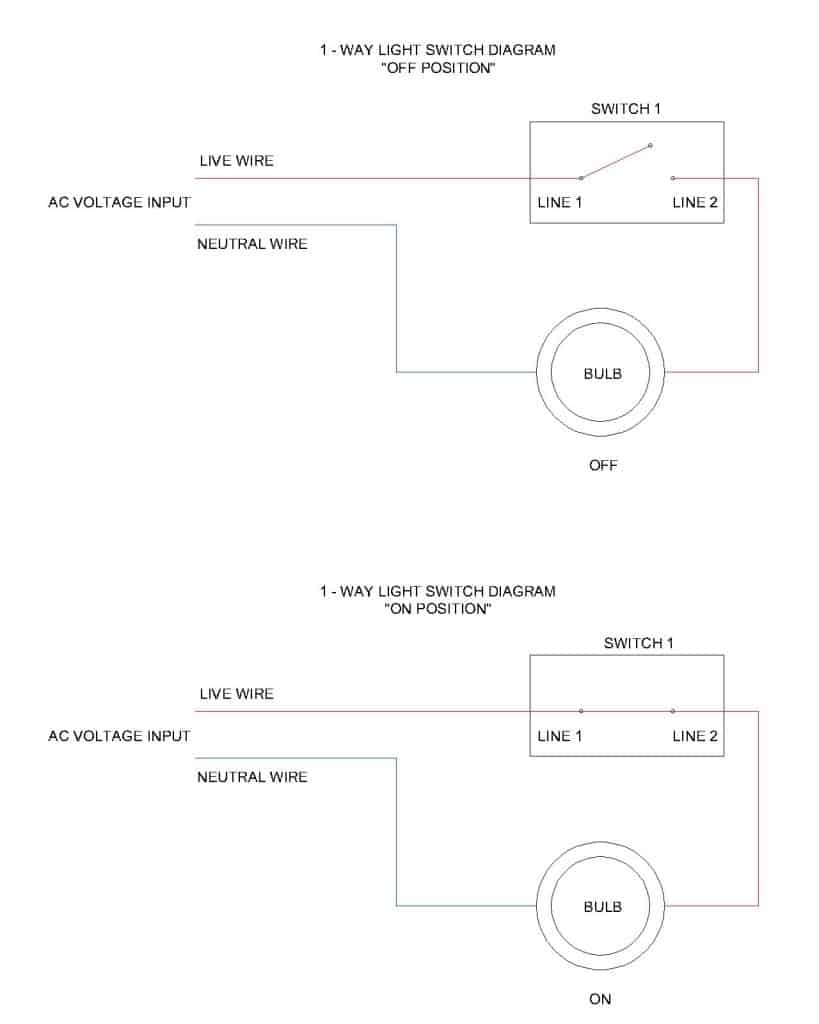
Light switches are very simple. There is just one type of light switch called a “one way” switch that can be used to control almost any light source in your home or office.
Single Light Switch Wiring Diagram
Parts of the Circuit:
To make a “one way” light switch circuit you will only need three basic parts. They include: (a) a “one way” light switch, (b) a light bulb or lamp, and (c) the electrical wiring to connect those parts togeather. The switch itself has two wires attached to it. Each terminal on the switch typically have a label such as L1 and L2 and the labels identify wich wires connect to the switch to allow the electricity to flow through it.
Electric Flow:
The live wire, also refered to as the phase wire, carries electrical current to the light switch from your power supply. The live wire is the point of entry into the light switch. All the light switch does is either open or close the electrical circuit. If you switch the light switch to the ON position, the circuit is closed and the electricity flows from the live wire through the light switch to the light bulb, turning the light on. If you switch the light switch to the OFF position, the circuit is opened and the light goes out too.
Step-by-Step Process:
In order to help you visualize exactly what is happening at the light switch when you flip it, I’ll describe the entire process step by step. First, the electricity travels from the live wire through your house. Next, the electricity reaches the light switch and stops until you tell it otherwise. When you switch the light switch to the ON position, the electricity flows through the light switch and then continues to the light bulb through the other end of the wire Because the light bulb receives the proper amount of electrical energy, it will light up. After passing through the light bulb, the electricity needs to travel back to the begining of the circuit so it can complete the loop; therefore, it uses the neutral wire to return to the start of the circuit. When you switch the light switch to the OFF position, you are creating a “break” in the circuit – the electricity cant jump the gap between the open switch and therefore will stop flowing and the light will turn off.
Important Safety Information:
When working with electrical systems, remember there is a very important safety rule. Never install a switch on the neutral wire, always install the switch on the live wire. By installing the switch on the live wire, you ensure there will be no electrical current available at the light fixture when the switch is turned off making it safe to replace light bulbs and maintain the light fixture.
Get the PDF version of Single Light Switch Wiring Diagram here